
(6 minute read)
Protein-maxxing – people are obsessed with protein these days. “What do you do for protein?” is one of the first questions most VegOttawa members are asked when people find out that we are embracing a plant-based diet. The fear of not being able to get enough protein can even be a mental barrier for some people to go vegan. So we present to you a list of some great protein sources, and the answers to some common questions! We hope this will help new vegans (and the veg-curious) feel more confident that they can easily obtain all their protein goals.
- Trust the Tofu!
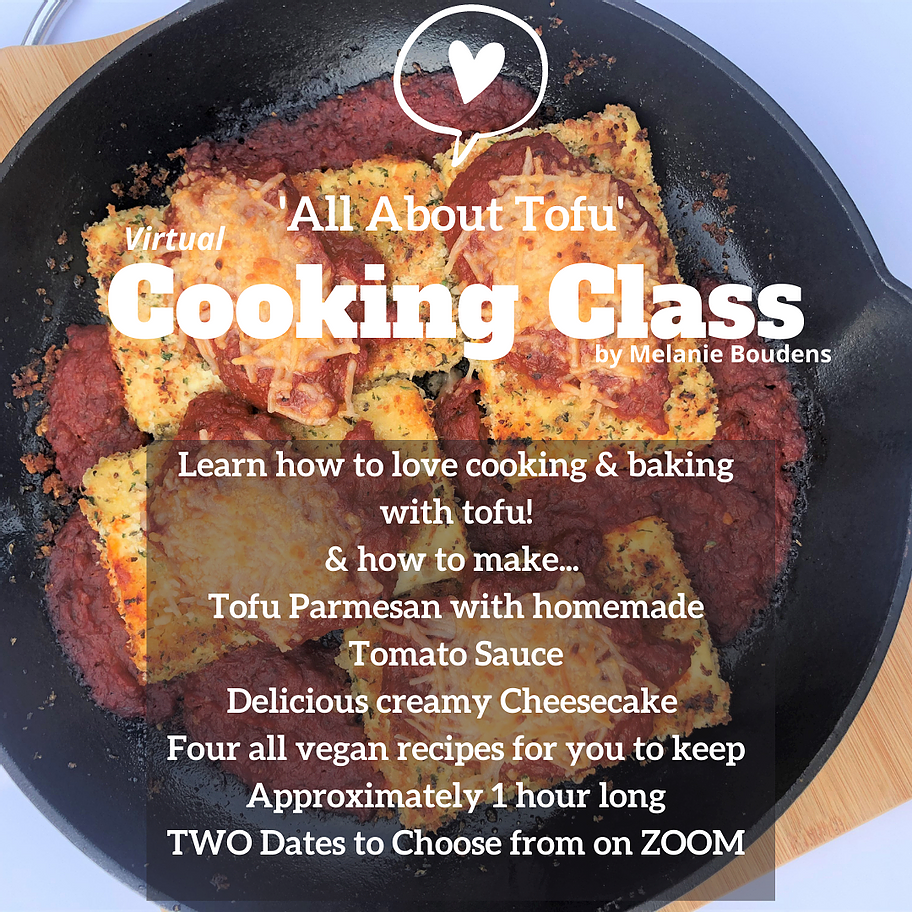
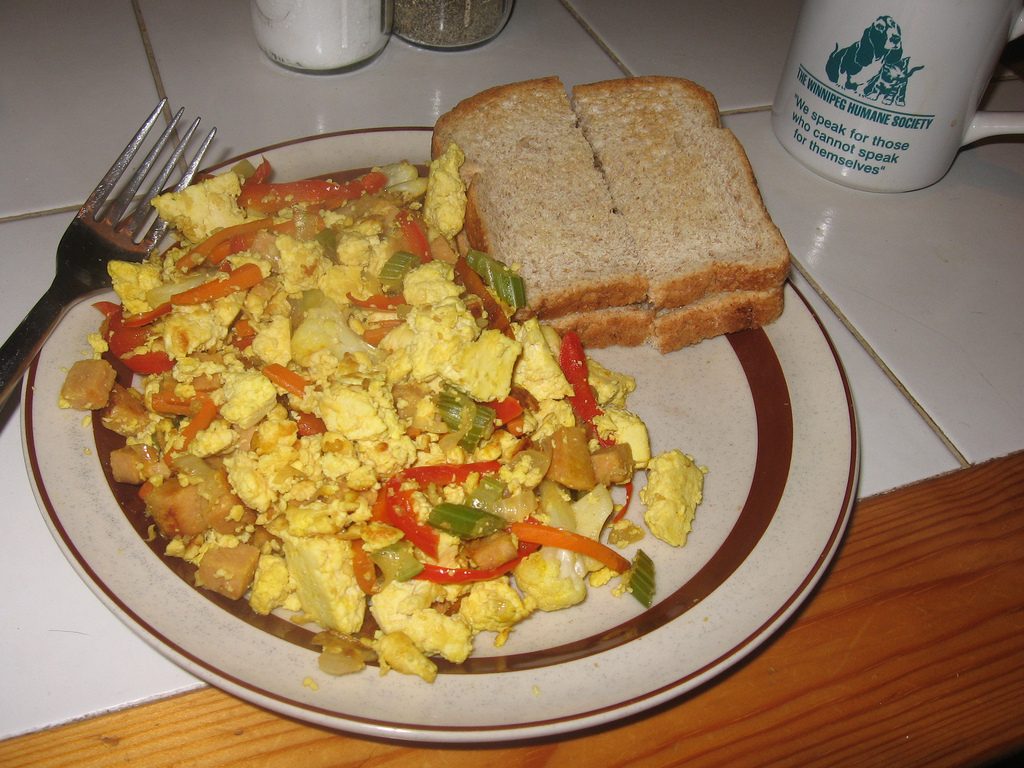
Tofu is not only a great source of protein, It’s also easy to incorporate into meals. Firm tofu can be cubed and added into stir-fry and curry dishes. You can crinkle cut tofu, powder it with cornstarch and spices and air fry it – or just put a slice of tofu in your waffle maker or panini press and top it with a savory or sweet topping. Silken tofu is just as versatile, and can be blended into pasta sauce, mousse, or even smoothies.
- Fake it till you make it!
There’s a lot of controversy (and misinformation) about ultraprocessed foods lately, but the body of evidence shows that plant-based meat is better for your health than animal-based meat[1] because it has less saturated fat and zero cholesterol. It also has fibre, which 95% of Canadians are not consuming enough of, and is not found in any animal products. So don’t be afraid to eat those neatballs, chick’n nuggets or phoney baloney if it makes your transition to a plant-based diet easier. The offerings these days are incredible! If you don’t see it on the menu of your favourite restaurant don’t be afraid to ask…it’s a great way to send the signal that you’d appreciate it.
- Take a Powder!
There are so many great vegan protein powders available now. Not only can protein powder be used in shakes or smoothies they can also be substituted for flour in baking. When life is busy you can easily just add some protein powder to your milk-substitute and jack up your cereal.
- Go Nuts!
Simple peanut butter is a great source of protein. It’s also not difficult to find powdered peanut butter in stores these days – this is a huge life hack as it has much less fat in it and can be easily used to make peanut sauces and is a good smoothie addition too. Brazil nuts are also a great source of important micronutrients like magnesium and selenium, but eat only 1-2 a day. Overall, about ¼ cup of nuts is a great daily target.
- Eat beans not beings!
Beans are a great source of protein and fibre. There are so many types of beans and so many ways to eat them. Hummus, black beans and rice, veggie chili…did we say hummus? Add chickpeas to your salad or have brown beans on toast for breakfast. Fava beans might become your fav – the Canadian prairies have the perfect growing conditions for these, so you can level up your patriotism too. Lupini beans and edamame are great snacking beans. Just introduce beans into your diet slowly to avoid digestive issues.
- Nutritional yeast is the cheat code!
Also lovingly called “Nooch”, vegans put that stuff on everything.. It’s great to use as a substitute for parmesan on your pasta, add it into soups, mix it into dips to give a cheesy taste…and try it on popcorn for a late night snack. It’s also a source of B12 if fortified. Nutritional yeast can be found in most grocery stores and health food stores in the baking or organic section, or at Bulk Barn.
This is not by any means a complete list of life hacks that VegOttawa members employ to ensure their getting their protein. Come back and visit this list now and again, we might update it to add information about lentils, seitan, TVP (textured vegetable protein) and more!
Common Protein Questions
Do plants have enough, or the right kind, of protein?
The first thing to keep in mind is that protein deficiency is quite rare. Some attention is needed, but getting enough protein on a vegan diet is not a large ongoing burden and certainly not more than planning any healthy diet.
Second, all plant-based protein sources do contain all essential amino acids, the building blocks of protein.[2] The caveat is that they are in different amounts in different sources. However, as long as you eat a variety of foods, this is generally not an issue – especially if including foods like soy, beans, and lentils, as these are high in the amino acids which are most limited in other plant foods.
Lastly, there are claims about digestibility of plant proteins. There’s plenty of speculation about mechanisms, and discussion about the measurement systems.[3] But we can skip all of that because what we care about are the outcomes, and when you test equal amounts of plant protein vs animal protein in producing muscle and strength gains, you find no difference.[4][5] This tells us that the digestibility is approximately equivalent in practice.
Are there health benefits to plant-based protein?
So glad you asked. Yes! For example, one study found that switching just 3% of calories from animal protein to plant protein is associated with a 24% lower risk of coronary artery disease.[6] That’s a huge effect from just swapping 60 calories a day! Ultimately, oodles of scientific research shows that eating more plants and less animals has significant health benefits, including reducing your risk of heart disease, diabetes, many cancers, and death from all causes.
Is soy healthy?
Again, yep! Studies consistently associate regular soy consumption with lower incidence of cardiovascular disease, cancers such as breast and prostate cancer, type 2 diabetes, death from all causes, and more.[7][8][9] So including soy-based foods like tofu, edamame, and soy milk in your diet can lead to big gains in overall health.
One of the most persistent myths about soy is its impact on hormones, specifically estrogen. There has been a lot of concern about this lately, but it is unfounded. The confusion comes from the fact that soy does contain phytoestrogen, aka plant estrogen. But phytoestrogens bind to estrogen receptors much more weakly than actual estrogen, and in some cases may even block excess estrogen from binding. This is shown by extensive research on the topic, finding that soy products generally do not impact our hormones or bodies in the way people fear.[10][11]
Got any other questions? Send us an email at info@vegottawa.org and we can update the info!
[1] Greger, M. (2025). Are ultra-processed plant-based meats better than the alternative? Clinical Nutrition Open Science, Volume 61, 2025. https://doi.org/10.1016/j.nutos.2025.04.005
[2] Gardner, G. C., Hartle, J. C., Garrett, R. D., Offringa, L. C., & Wasserman, A. S. (2019). Maximizing the intersection of human health and the health of the environment with regard to the amount and type of protein produced and consumed in the United States. Nutrition Reviews, Volume 77, Issue 4, April 2019, Pages 197–215. https://doi.org/10.1093/nutrit/nuy073
[3] Craddock, J. C., Genoni, A., Strutt, E. F., & Goldman, D. M. (2021). Limitations with the Digestible Indispensable Amino Acid Score (DIAAS) with Special Attention to Plant-Based Diets: a Review. Current Nutrition Reports, March 2021, 10(1):93-98. https://doi.org/10.1007/s13668-020-00348-8
[4] Hevia-Larraín, V., Gualano, B., Longobardi, I., Gil, S., Fernandes, A. L., Costa, L. A. R., Pereira, R. M. R., Artioli, G. G., Phillips, S. M., & Roschel, H. (2021). High-Protein Plant-Based Diet Versus a Protein-Matched Omnivorous Diet to Support Resistance Training Adaptations: A Comparison Between Habitual Vegans and Omnivores. Sports medicine (Auckland, N.Z.), 51(6), 1317–1330. https://doi.org/10.1007/s40279-021-01434-9
[5] Messina, M., Lynch, H., Dickinson, J. M., & Reed, K. E. (2018). No Difference Between the Effects of Supplementing With Soy Protein Versus Animal Protein on Gains in Muscle Mass and Strength in Response to Resistance Exercise. International journal of sport nutrition and exercise metabolism, 28(6), 674–685. https://doi.org/10.1123/ijsnem.2018-0071
[6] Glen, A. J., Wang, F., Tessier, A-J., Manson, J. E., Rimm, E. B., Mukamal, K. J., Sun, Q., Willett, W. C., Rexrode, K. M., Jenkins, J. A., & Hu, F. B. (2024). Dietary plant-to-animal protein ratio and risk of cardiovascular disease in 3 prospective cohorts. The American Journal of Clinical Nutrition, Volume 120, Issue 6, Pages 1373-1386. https://doi.org/10.1016/j.ajcnut.2024.09.006
[7] Lu, T., Zhang, W., Jiang, C., Jin, Y. L., Yeung, S. L. A., Cheng, K. K., Lam, T. H., & Xu, L. (2024). Associations of soy product intake with all-cause, cardiovascular disease and cancer mortality: Guangzhou Biobank Cohort Study and updated meta-analyses. European Journal of Nutrition 63, 1731–1745. https://doi.org/10.1007/s00394-024-03363-5
[8] Li, W., Wei, X., Zhang, J., Wang, L., Chen, L., Li, F., Jiang, H., Wang, Z., & Xun, Y. (2026). Soy Foods Consumption and Multiple Health Outcomes: An Umbrella Review of Meta-Analyses. Molecular nutrition & food research, 70(1), e70255. https://doi.org/10.1002/mnfr.70255
[9] Zuo, X., Zhao, R., Wu, M., Wan, Q., & Li, T. (2023). Soy Consumption and the Risk of Type 2 Diabetes and Cardiovascular Diseases: A Systematic Review and Meta-Analysis. Nutrients, 15(6), 1358. https://doi.org/10.3390/nu15061358
[10] Reed, K. E., Camargo, J., Hamilton-Reeves, J., Kurzer, M., & Messina, M. (2021). Neither soy nor isoflavone intake affects male reproductive hormones: An expanded and updated meta-analysis of clinical studies. Reproductive Toxicology, March 2021 100:60-67. https://doi.org/10.1016/j.reprotox.2020.12.019
[11] Messina, M., Mejia, S. B., Cassidy, A., Duncan, A., Kurzer, M., Nagato, C., Ronis, M., Rowland, I., Sievenpiper, J., & Barnes, S. (2022). Neither soyfoods nor isoflavones warrant classification as endocrine disruptors: a technical review of the observational and clinical data. Critical reviews in food science and nutrition, 62(21), 5824–5885. https://doi.org/10.1080/10408398.2021.1895054



 VegOttawa Association